点击播放《石膏绷带》
高清线路正在播放
石膏绷带
像往常一样,走在下班路上的和子(尾野真千子饰演)上了天桥,发现前面有个拄着双拐走路的女孩环(佐伯日菜子饰演)。和子很快留意到这个陌生神秘女子,在她左脚上打着白色厚重石膏,看着既不灵活又不方便。果然在和子表示想帮助对方时,环用一种不太自然、没有敬语的命令口吻——要和子把她右脚的高跟鞋脱掉,说是穿着不适。 随后,和子就来到环一人独居的家中。之后环又提出要冰镇啤酒,显然行动不便的她是命令和子满足该要求。和子照办了,跑转一圈才买到冰啤,不料环居然给了她房间的钥匙作为答谢。这就是《石膏绷带》的故事开始,称不上绝妙超凡,却趣味有余。
导演:盐田明彦 主演:佐伯日菜子/尾野真千子/津田宽治
相关推荐
 ◎8.6▶
◎8.6▶成都爱情故事
阿瑞是香港小有名气导演,由于偏执的性格和忙碌的生活,让他在工作和感情上都出现重大挫折,低迷中,他收到成都女孩晓晴的邀请,前去成都看望自己曾资助过的灾区小孩。晓晴是一个陶艺店老板,有一位聪明能干的助手左小强,左小强在追求晓晴未果后,偶然遇到去陶艺馆对面餐馆演奏小提琴的伊雪,并萌生爱意,在追求过程中,得知伊雪的梦想是演戏,左小强为了讨伊雪欢心找到了刚来到成都的导演阿瑞,令人预想不到的是,这次相遇改变了这4个80后年青人今后的事业轨迹和爱情轨迹……
 ◎7.8▶
◎7.8▶情萦田纳西
年轻的纽约女孩南希在去参加一场聚会的路上遇见了年轻的男孩查理。在两人的接触和了解中,查理发现了南希的音乐梦。于是两人一起去纽约,鼓励南希为了实现自己的梦想努力。但是花心的制片人骗了南希,而南希为了得到制片人帮助自己顺利出第一张专辑,拒绝了查理的忠告,两人闹掰。而后,南希意识到自己做错了,跑去跟查理道歉。就在查理的修车厂门口,南希用两人一起写的那首歌打动了查理,两人重归于好。
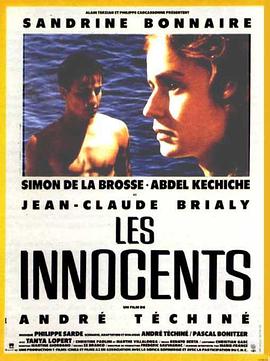 ◎9.6▶
◎9.6▶无辜者
A girl leaves home to find her runaway brother, and finds several people who change her life.
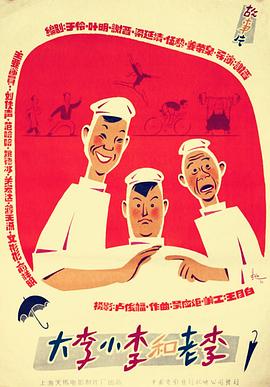 ◎8.8▶
◎8.8▶大李小李和老李
上海某肉联加工厂工会主席大李(刘侠声)是个热心人,却有个不雅的“气象台”绰号:他工作虽积极,身体却由于不运动十分糟糕,一到阴雨天就会腰酸腿疼,邻居只要见他手拿雨伞出门,效仿着准没错。车间主任老李(范哈哈)认为工作远比体育重要百倍,很是不满成日嚷嚷要在厂里搞种种体育活动的儿子小李(姚德冰)。厂里职工大力士(关宏达)自认力气大过天,对体育活动也是一脸不屑。 小李和其他热爱体育的同事商量,决定选出一个体协主席带领大伙展开锻炼。老李听闻,和大力士一合计,有心推选大李做主席,一来不得罪儿子,二来体育活动很快就会有始无终。哪想大李竟然新官上任三把火,烧得老李很是尴尬。可是老李认死了体育无用,哪怕大李老婆、五个孩子的妈妈秀梅(昔日与他站在一条战线)积极投身锻炼,他也不为所动。
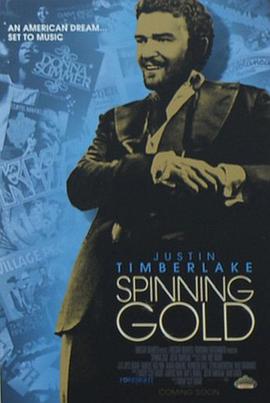 ◎6.7▶
◎6.7▶旋转的金唱片
A biopic of 1970s record producer Neil Bogart, co-founder of Casablanca Records.
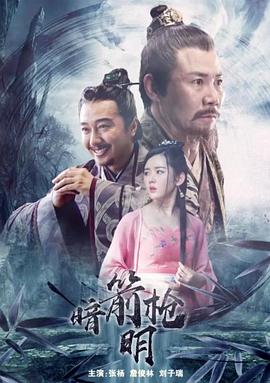 ◎6.5▶
◎6.5▶暗箭明枪
麟、府二州联姻在即,第一要塞从此固若金汤。却不想府州刺史长子命丧麟州,两州成仇。为洗清嫌疑,杨折两家辗转二州调查,发现了凶案背后的阴谋,最后二州铁骑联手,击溃辽军,挡住敌军践踏中原。
 ◎6.7▶
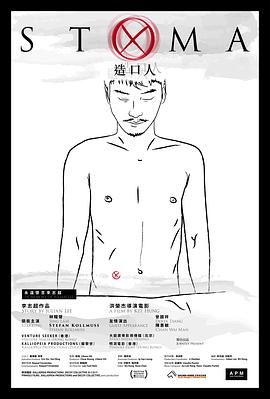
◎6.7▶造口人
影片描述的是一个癌症同性恋患者为了让自己静心休养,同时追求自己的爱情,来到了瑞士艾门塔尔,在这里田园般的环境中,以求心灵的宁静,并重新燃起对生命和未来的希望。
 ◎3.4▶
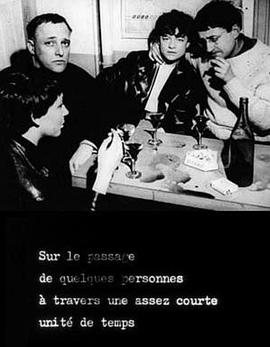
◎3.4▶关于在短时间内的某几个人的经过
Voice 1 (male professional announcer type) This neighborhood(1) was made for the wretched dignity of the petty bourgeoisie, for respectable occupations and intellectual tourism. The sedentary population of the upper floors was sheltered from the influences of the street. This neighborhood has remained the same. It was the strange setting of our story, where a systematic questioning of all the diversions and works of a society, a total critique of its idea of happiness, was expressed in acts. These people also scorned subjective profundity. They were interested in nothing but an adequate and concrete expression of themselves. Voice 2 (Debord, monotone) Human beings are not fully conscious of their real life - usually groping in the dark; overwhelmed by the consequences of their acts; at every moment groups and individuals find themselves confronted with results they have not wished. Voice 1 They said that oblivion was their ruling passion. They wanted to reinvent everything each day; to become the masters and possessors of their own lives. Just as one does not judge a man according to the conception he has of himself, one cannot judge such periods of transition according to their own consciousness; on the contrary, one must explain the consciousness through the contradictions of material life, through the conflict between social conditions and the forces of social production. The progress achieved in the domination of nature was not yet matched by a corresponding liberation of everyday life. Youth passed away among the various controls of resignation. Our camera has captured for you a few aspects of a provisional microsociety. The knowledge of empirical facts remains abstract and superficial as long as it is not concretized by its integration into the whole ” which alone permits the supersession of partial and abstract problems so as to arrive at their concrete essence, and implicitly at their meaning. This group was on the margins of the economy. It tended toward a role of pure consumption, and first of all the free consumption of its time. It thus found itself directly engaged in qualitative variations of everyday life but deprived of any means to intervene in them. The group ranged over a very small area. The same times brought them back to the same places. No one went to bed early. Discussion on the meaning of all this continued... Voice 2 Our life is a journey ” In the winter and the night. ” We seek our passage...� Voice 1 The abandoned literature nevertheless exerted a delaying action on new affective formulations. Voice 2 There was the fatigue and the cold of the morning in this much-traversed labyrinth, like an enigma that we had to resolve. It was a looking-glass reality through which we had to discover the potential richness of reality. On the bank of the river evening began once again; and caresses; and the importance of a world without importance. Just as the eyes have a blurred vision of many things and can see only one clearly, so the will can strive only incompletely toward diverse objects and can completely love only one at a time. Voice 3 (young girl) No one counted on the future. It would never be possible to be together later, or anywhere else. There would never be a greater freedom. Voice 1 The refusal of time and of growing old automatically limited encounters in this narrow, contingent zone, where what was lacking was felt as irreparable. The extreme precariousness of the means of getting by without working was at the root of this impatience which made excesses necessary and breaks definitive. Voice 2 One never really contests an organization of existence without contesting all of that organization's forms of language. Voice 1 When freedom is practiced in a closed circle, it fades into a dream, becomes a mere representation of itself. The ambiance of play is by nature unstable. At any moment ordinary life� can prevail once again. The geographical limitation of play is even more striking than its temporal limitation. Any game takes place within the contours of its spatial domain. Around the neighborhood, around its fleeting and threatened immobility, stretched a half-known city where people met only by chance, losing their way forever. The girls who found their way there, because they were legally under the control of their families until the age of eighteen, were often recaptured by the defenders of that detestable institution. They were generally confined under the guard of those creatures who among all the bad products of a bad society are the most ugly and repugnant nuns. What usually makes documentaries so easy to understand is the arbitrary limitation of their subject matter. They describe the atomization of social functions and the isolation of their products. One can, in contrast, envisage the entire complexity of a moment which is not resolved into a work, a moment whose movement indissolubly contains facts and values and whose meaning does not yet appear. The subject matter of the documentary would then be this confused totality. Voice 2 The era had arrived at a level of knowledge and technical means that made possible, and increasingly necessary, a direct construction of all aspects of a liberated affective and practical existence. The appearance of these superior means of action, still unused because of the delays in the project of liquidating the commodity economy, had already condemned aesthetic activity, whose ambitions and powers were both outdated. The decay of art and of all the values of former mores had formed our sociological background. The ruling class's monopoly over the instruments we needed to control in order to realize the collective art of our time had excluded us from a cultural production officially devoted to illustrating and repeating the past. An art film on this generation can only be a film on its absence of real creations. Everyone unthinkingly followed the paths learned once and for all, to their work and their home, to their predictable future. For them duty had already become a habit, and habit a duty. They did not see the deficiency of their city. They thought the deficiency of their life was natural. We wanted to break out of this conditioning, in quest of another use of the urban landscape, in quest of new passions. The atmosphere of a few places gave us intimations of the future powers of an architecture it would be necessary to create to be the support and framework for less mediocre games. We could expect nothing of anything we had not ourselves altered. The urban environment proclaimed the orders and tastes of the ruling society just as violently as the newspapers. It is man who makes the unity of the world, but man has extended himself everywhere. People can see nothing around them that is not their own image; everything speaks to them of themselves. Their very landscape is alive. There were obstacles everywhere. There was a cohesion in the obstacles of all types. They maintained the coherent reign of poverty. Everything being connected, it was necessary to change everything by a unitary struggle, or nothing. It was necessary to link up with the masses, but we were surrounded by sleep. Voice 3 The dictatorship of the proletariat is a desperate struggle, bloody and bloodless, violent and peaceful, military and economic, educational and administrative, against the forces and traditions of the old world. Voice 1 In this country it is once again the men of order who have rebelled. They have reinforced their power. They have been able to aggravate the grotesqueness of the ruling conditions according to their will. They have embellished their system with the funereal ceremonies of the past. Voice 2 Years, like a single instant prolonged to this point, come to an end. Voice 1 What was directly lived reappears frozen in the distance, fit into the tastes and illusions of an era, carried away with it. Voice 2 The appearance of events that we have not made, that others have made against us, now obliges us to be aware of the passage of time, its results, the transformation of our own desires into events. What differentiates the past from the present is precisely its out-of-reach objectivity; there is no more should-be; being is so consumed that it has ceased to exist. The details are already lost in the dust of time. Who was afraid of life, afraid of the night, afraid of being taken, afraid of being kept Voice 3 What should be abolished continues, and we continue to wear away with it. We are engulfed. We are separated. The years pass and we haven't changed anything. Voice 2 Once again morning in the same streets. Once again the fatigue of so many similarly passed nights. It is a walk that has lasted a long time. Voice 1 Really hard to drink more. Voice 2 Of course one might make a film of it. But even if such a film succeeds in being as fundamentally disconnected and unsatisfying as the reality it deals with, it will never be more than a re-creation ” poor and false like this botched traveling shot. Voice 3 There are now people who pride themselves on being authors of films, as others were authors of novels. They are even more backward than the novelists because they are unaware of the decomposition and exhaustion of individual expression in our time, ignorant of the end of the arts of passivity. They are praised for their sincerity since they dramatize, with more personal depth, the conventions of which their life consists. There is talk of the liberation of the cinema. But what does it matter to us if one more art is liberated through which Tom, Dick or Harry can joyously express their slavish sentiments The only interesting venture is the liberation of everyday life, not only in the perspectives of history but for us and right away. This entails the withering away of alienated forms of communication. The cinema, too, has to be destroyed. Voice 2 In the final analysis, stars are created by the need we have for them, and not by their talent or lack of talent or even by the film industry or advertising. Miserable need, dismal, anonymous life that would like to expand itself to the dimensions of cinema life. The imaginary life on the screen is the product of this real need. The star is the projection of this need. The images of the advertisements during the intermissions are more suited than any others for evoking an intermission of life. To really describe this era it would no doubt be necessary to show many other things. But what would be the point Better to grasp the totality of what has been done and what remains to be done than to add more ruins to the old world of the spectacle and of memories. 1. This film, which evokes the lettrist experiences at the origin of the situationist movement, opens with shots of the Paris district frequented by the lettrists in the early 1950s.
 ◎7▶
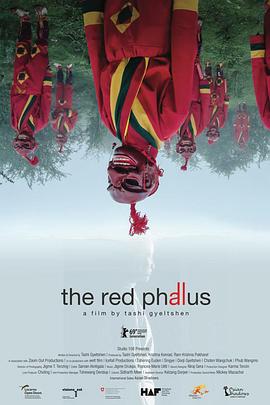
◎7▶红色欲望
事物在寂静的癫狂中支离破碎。三条生命和一块空白里程碑。无处可去。一切都被困在由阳具和面具构成的错综复杂的世界里。
 ◎3.5▶
◎3.5▶塞内卡
Seneca’s foster son, the Emperor Nero, grows weary of his mentor and orders him to kill himself. Seneca complies but his death is agonisingly slow. Cue John Malkovich in the role of the great philosopher in uproar, railing against tyranny. Bliss!
 ◎6.1▶
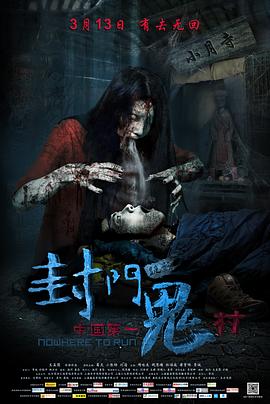
◎6.1▶封门诡影
心理学教授张扬(小张铎 饰)在讲课时突然遭遇离奇幻影,这令他内心焦虑万分。当晚他收到哥哥张默(屠育玮 饰)发来的视频邮件,视频中哥哥前往一度震惊全国的闹鬼村落封门村探险,并在当地发现了什么可怕的真相。视频戛然而止,而哥哥则下落不明。在此之后,他约上哥哥的女友徐笑笑(刘滢 饰)启程前往封门,路上还搭载了两个前往同一个目的地的驴友文凯(隋咏良 饰)和小彤(钱思曈 饰)。杳无人迹的封门村,遗留下许多神秘诡异的物件。期间他们还遭遇了一支来此寻幽探险的电视台摄制组。夜幕降临,鬼影幢幢,这群人将经历最为恐怖的夜晚……
 ◎7.8▶
◎7.8▶春之樱:吟子和她的弟弟
东京一隅,温柔善良的高野吟子(吉永小百合 饰)独自打理着去世丈夫留下来的药店。过去的20年里,她和婆婆、女儿小春(蒼井優 饰)住在一起,虽颇多艰辛,但日子平淡幸福。如今,女儿将要嫁作人妻,吟子喜悦
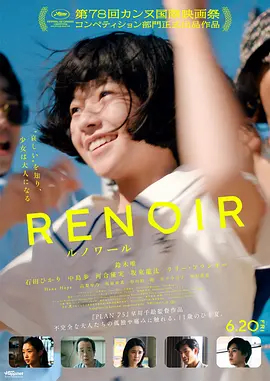 ◎--▶
◎--▶雷诺阿2025
影片用细腻的笔触描绘了11岁少女在1987年的夏天发生的故事,忙于工作的母亲,生病住院的父亲。处在孩子和大人之间淡淡的分界线上飘荡的少女,一边窥视着大人的世界,一边感受到人们内心的痛苦。对死亡的好奇心和恐惧,活着是无可奈何的寂寞,渴求被人温暖。高兴、 开心、寂寞、恐惧、哀伤,从少女的视角浮现出各种各样的情感的闪光。
 ◎--▶
◎--▶庆州纪行
母亲玉实(李姃垠 饰)在杀害小女儿京珠的犯人出狱当天,和三个女儿前往庆州展开的特别家庭旅行,目的就是为小女儿复仇。
 ◎--▶
◎--▶90米
本片由曾有照顾母亲经历的中川导演执导,是一部半自传性质的作品。故事讲述面临人生抉择的高三学生藤村佑(山时聪真 饰),与身患重病却始终关爱儿子的母亲美咲(菅野美穗 饰)之间的亲情故事。在命运与时间的交织中,母子二人一同面对生命的无常与温柔,展现出深沉的爱与别离的勇气。
 ◎--▶
◎--▶缘财天降
一念真心,财暖人间
 ◎--▶
◎--▶不存在的罪人
当红小说家维瑞蒂(安妮·海瑟薇 饰)因故无法写作,落魄作家洛温(达科塔·约翰逊 饰)接受了为她代笔的工作。然而在整理资料时,洛温发现了一份深藏秘密的自传手稿,记录着维瑞蒂丈夫杰里米(乔什·哈奈特 饰)那些扭曲骇人的“告白”。洛温自此陷入爱情、谎言与欲望的拉扯中,难分现实与虚构世界,她该如何看清真相? 影片改编自柯琳·胡佛的同名畅销小说。
 ◎--▶
◎--▶储物柜2025
疫情后的上海,人们的生活方式已经永久地发生了改变,一对男女也在漫长的朝夕相处中感 受到疲惫。凌晨时分,缠绵过后,女人给了男人一把钥匙和位于另一座城市的储物柜的地 址,男人不知道等待在这段深夜旅途的前方是什么,而女人仿佛也有自己的计划...