内容简介
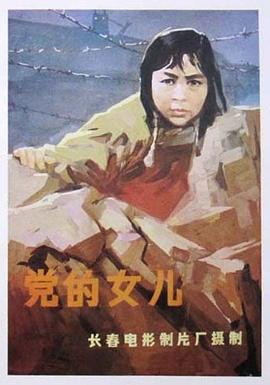
中央红军北上抗日后,白匪军卷土重来,红色根据地一夜之间变了颜色,到处充满了血雨腥风。玉梅(田华 饰)的家乡处在白色恐怖之中。党组织受到严重破坏,来不及转移的赤卫队干部和红军家属惨遭毒手。侥幸逃脱的玉梅受到叛徒马玉辉(李林 饰)的百般纠缠,多亏马玉辉妻子协助,玉梅总算逃脱了魔爪。在去东山寻找党组织的途中,遇见另外两个女党员,她们是惠珍(杜凤霞 饰)和秀英(李萌 饰),她们也是被迫上山找党的。三人成立了党小组,玉梅任组长,她们发誓一定找到党组织,领导群众坚持地下武装斗争,等红军打回来,为死难的乡亲报仇。有一次,山上的通信员小程(王春英 饰)到玉梅处取为游击队准备的干粮时,被敌匪首(周文斌 饰)带人包围,为掩护同志脱险,玉梅挺身而出......
相关推荐
 ◎3.3▶
◎3.3▶绝色霸王花
拳击手威风哥(孙迅饰)和富二代无敌超(孟智超)结伴泰国游却无意中卷入一场黑社会仇杀,临危之时美女警察昆麦(POY饰)帮他俩逃跑。混乱中得到一张记有藏毒信息的彩票,黑帮和警察都想夺取到手。经过了黑帮赌场、盗墓黑店,红灯区之战,每一充满次都险些丧命,就在抉择之时曾经帮助过他们的麦昆却被黑帮给绑走了,最终迫使二人迈上了英雄之路……
 ◎8.6▶
◎8.6▶守信少年
两个黄土地的农村娃因为坚持内心的“诚信”拯救了崩溃的青年,讲述学生赵星辰、林秋菊通过诚信守信感动了绑架犯贾强,贾强投案自首的故事……
 ◎9.2▶
◎9.2▶惊心动魄之毁尸灭迹
马大富商场失败后,携妻子、两个女儿到偏僻的山村中开了一家旅店,旅店开张多日竟没有人生意。后在一疯妇的指引下,旅店中原来有猛鬼占据,致使没有生意。一家人用尽手段赶走猛鬼,终于迎来第一批客人。然而一夜之间
 ◎5.4▶
◎5.4▶早安孟买
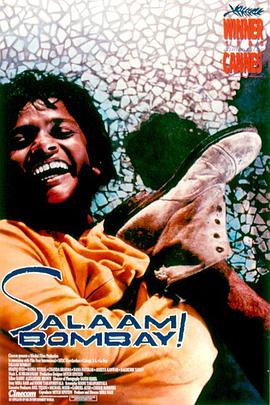
在印度的一个角落里,一个男子正在梦想……他梦见他拿着500个卢比来到了他母亲的身边,希望自己和母亲不在那么痛苦,可当他正要放到母亲手里的时候,却看到了四周都是和他一样的孩子,还有十多个很老很老的老人,这些人立刻把她包围了,他慢慢的被人群吞噬…… 出生于印度一座小镇上的一个中产阶级家庭,曾做过女演员。1976年,她进美国哈佛大学学习并在那里开始爱上了电影制作。学生时代她拍摄了一系列关于当代印度社会的纪录片,获得了一定的影响力。 米拉 奈儿的第一部剧情片《早安孟买》(SALLAM BOMBAY!),展现了在孟买贫民区中挣扎的一个小男孩痛苦的生活,以纪录片式的手法和现实主义风格有力地揭开了流浪儿悲惨的经历,尽管是处女作,但平稳成熟,一举摘取了1988年坎城电影节金摄影机奖。 自80年代开始,米拉步奈儿就成为了印度电影在西方的一个标志性人物。她的其他片子包括《MISSISSIPPI MASALA》、《THE PEREZ FAMILY, KAMA SUTRA》、《A TALE OF LOVE》以及最近为HBO所拍摄的纪录片 《THE LAUGHING CLUB OF INDIA》(哈哈俱乐部)。 她是第一位抱走金狮奖的女性导演。
 ◎7.4▶
◎7.4▶欧洲的某个地方
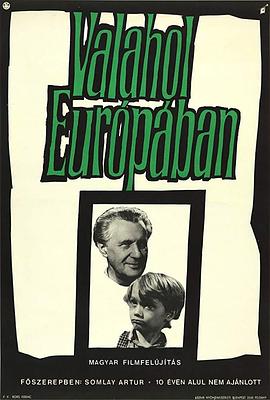
Somewhere in the remote region, the war ends. In the midst of ruined cities and houses in the streets, in rural hamlets, everywhere where people still live, are children who have lost their homes and parents. Abandoned, hungry, and in rags, defenseless and humiliated, they wander through the world. Hunger drives them. Little streams of orphans merge into a river which rushes forward and submerges everything in its path. The children do not know any feeling; they know only the world of their enemies. They fight, steal, struggle for a mouthful of food, and violence is merely a means to get it. A gang led by Cahoun finds a refuge in an abandoned castle and encounters an old composer who has voluntarily retired into solitude from a world of hatred, treason, and crime. How can they find a common ground, how can they become mutual friends The castle becomes their hiding place but possibly it will also be their first home which they may organize and must defend. But even for this, the price will be very high. To this simple story, the journalist, writer, poet, scriptwriter, movie director, and film theoretician Béla Balázs applied many years of experience. He and the director Géza Radványi created a work which opened a new postwar chapter in Hungarian film. Surprisingly, this film has not lost any of its impact over the years, especially on a profound philosophical level. That is to say, it is not merely a movie about war; it is not important in what location and in what period of time it takes place. It is a story outside of time about the joyless fate of children who pay dearly for the cruel war games of adults. At the time it was premiered, the movie was enthusiastically received by the critics. The main roles were taken by streetwise boys of a children's group who created their roles improvisationally in close contact with a few professional actors, and in the children's acting their own fresh experience of war's turmoil appears to be reflected. At the same time, their performance fits admirably into the mosaic of a very complex movie language. Balázs's influence revealed itself, above all, in the introductory sequences an air raid on an amusement park, seen in a montage of dramatic situations evoking the last spasms of war, where, undoubtedly, we discern the influence of classical Soviet cinematography. Shooting, the boy's escape, the locomotive's wheels, the shadows of soldiers with submachine guns, the sound of a whistle—the images are linked together in abrupt sequences in which varying shots and expressive sharp sounds are emphasized. A perfectly planned screenplay avoided all elements of sentimentality, time-worn stereotypes of wronged children, romanticism and cheap simplification. The authors succeeded in bridging the perilous dramatic abyss of the metamorphosis of a children's community. Their telling of the story (the scene of pillaging, the assault on the castle, etc) independently introduced some neorealist elements which, at that time, were being propagated in Italy by De Sica, Rossellini, and other film artists. The rebukes of contemporary critics, who called attention to formalism for its own sake have been forgotten. The masterly art of cameraman Barnabás Hegyi gives vitality to the poetic images. His angle shots of the children, his composition of scenes in the castle interior, are a living document of the times, and underline the atmosphere and the characters of the protagonists. The success of the picture was also enhanced by the musical art of composer Dénes Buday who, in tense situations, inserted the theme of the Marseilaise into the movie's structure, as a motive of community unification, as an expression of friendship and the possibility of understanding. Valahol Europaban is the first significant postwar Hungarian film. It originated in a relaxed atmosphere, replete with joy and euphoria, and it includes these elements in order to demonstrate the strength of humanism, tolerance, and friendship. It represents a general condemnation of war anywhere in the world, in any form.
 ◎8.4▶
◎8.4▶不安
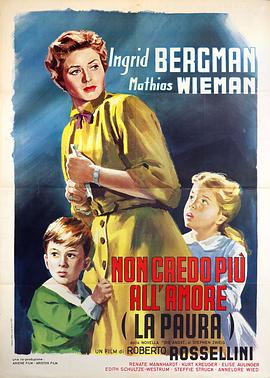
Whenever I see La Paura I think of it as a companion piece to Eyes Wide Shut, or maybe it is the other way around. Adultery makes both films tick but in different ways. I think Phillip French was right on the money when he pointed out a Wizard of Oz thing in Kubrick's last work. Like Dorothy, Tom and Nicole go through fantasies and nightmares and at the end Dorothy's reassuring childish motto there's no place like home is ironically updated to the adult circumstantial adage there's no sex like marital sex. Kubrick's take is intellectual, he never leaves the world of ideas to touch the ground. He taunts the audience first with an erotic movie and then with a thriller and refuses to deliver either of them. He was married to his third wife for 40 years, until he died. Rossellini was still married to Ingrid Bergman when he directed La Paura; they had been adulterous lovers and their infidelity widely criticized La Paura is a tale, a noirish one. The noir intrigue is solved and the tale has a happy ending. The city is noir; the country is tale, the territory where childhood is possible. The transition is operated in the most regular way by car, a long-held shot taken from the front of the car as it rides into the road, as if we were entering a different dimension. Irene (Bergman) starts the movie we just see a dark city landscape but her voice-over narration tells us of her angst and informs us that the story is a flashback, hers. Bergman's been cheating on her husband. At first guilt is just psychological torture but soon expands into economic blackmail and then grows into something else. From beginning to end the movie focuses on what Bergman feels, every other character is there to make her feel something. Only when the director gives away the plot before the main character can find out does he want us to feel something Bergman still can't. When she finds out, we have already experienced the warped mechanics of the situation and we may focus once again on the emotional impact it has on Bergman's Irene. In La Paura treasons are not imagined but real, nightmares are deliberate and the couple's venom suppurates in bitter ways. Needless to say, Ingrid has another of her rough rides in the movies but Rossellini doesn't dare put her away as he did in Europa 51, nor does he abandon her to the inscrutable impassivity of nature (Stromboli). His gift is less transcendent and fragile than the conclusion of Viaggio in Italia. He just gives his wife as much of a fairy tale ending as a real woman can have, a human landscape where she can finally feel at home. Back to the country, a half lit interior scene where shadows suggest the comfort of sleep. After all, it's the fairy godmother who speaks the last words in the movie.
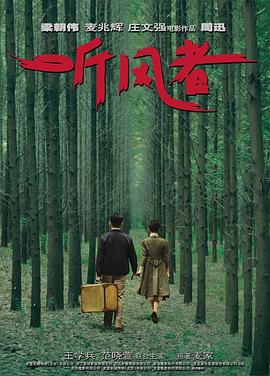 ◎9.4▶
◎9.4▶听风者
1949年,新中国建立之初。江山初定,百废待兴,和平的表象下没有硝烟的战争早已拉开序幕。败逃台湾的国民党接连向大陆派出特工,伺机破坏。为了应对接二连三的破坏活动,中共成立情报部门701局与敌方展开连番较量。同年10月初,701局控制的侦听局莫名消失,为了查清消失电台的下落,701局负责人老鬼(王学兵 饰)授命代号二〇〇的张学宁(周迅 饰)去上海寻找耳力超群的钢琴调音师罗三耳。结果阴差阳错,学宁找到了罗德小徒弟——耳力同样超群的盲人调音师阿兵(梁朝伟 饰)。 阿兵不负众望,不仅通过层层严苛的考试,还在工作中一鸣惊人。在残酷的谍报战争中,阿兵和学宁之间某种情愫也暗暗滋生……
 ◎9.9▶
◎9.9▶烈女雪沉冤
梁醒波(饰邱太师)受先皇赐予免死金牌,在朝上专横跋扈,定国公用龙头金鞭将之惩戒,太师自知理亏告老还乡,但还乡后依然仗势横行.新任知县区清泉指腹为婚之妻张玉姐遭太师强抢,清泉侨装假扮张玉姐之弟混入太师府收集太师罪证....
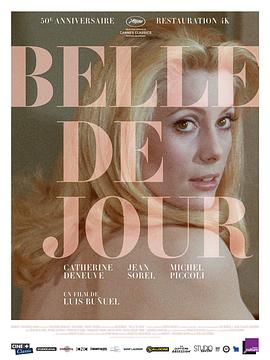 ◎3.3▶
◎3.3▶白日美人
美丽的中产阶级女子塞芙丽娜(凯瑟琳•德纳芙 Catherine Deneuve 饰)拥有一个幸福美满的家庭。身为外科医生的丈夫皮埃尔(让•索尔 Jean Sorel 饰)英俊温柔,收入颇丰,但他却始终无法令妻子得到肉欲上的满足。碍于身份,塞芙丽娜只得通过幻想自己受人虐待和欺凌,并从中得到欢愉。 无可忍耐之下,她跑到妓院卖身,因为只能在丈夫出诊的这段时间(下午2点到5点)出卖身体,因此她得到了“白日美人”的称号。从最初的抗拒到完全的解放,塞芙丽娜得到莫大的满足与快感。在此期间,她结识了职业杀手马塞尔(皮埃尔•克莱蒙迪 Pierre Clémenti 饰),后者为白日美人的美艳与神秘所吸引,却也将彼此带入现实与虚幻交错的混乱之中……
 ◎8.2▶
◎8.2▶圣诞恋爱季
众人期待的圣诞节即将来临,而艾瑞斯(多米尼克·普罗沃斯特-切克利 Dominique Provost-Chalkley 饰)也将在不久之后同相恋多年的男友席翁携手步入婚姻的殿堂,此时此刻,她的整个人都沉浸在幸福的气息之中。然而,让她没有想到的是,就在这个节骨眼上,席翁竟然选择了逃婚,艾瑞斯所预设的未来全部都化为了泡影。 在这万般艰难的时刻,好在有朋友们陪伴在艾瑞斯的身边,其中就有席翁的表姐麦道尔(杰西卡·克拉克 Jessica Clark 饰)。对于艾瑞斯的遭遇,麦道尔实际上是有一点点幸灾乐祸的,因为她一直默默的喜欢着艾瑞斯,如今的情况让她对这段本来无望的爱情重新燃起了希望。
 ◎9.5▶
◎9.5▶最后一次爱你
钢琴家因情感矛盾引发车祸,陷入昏迷。抢救她的医生是他的男友,而钢琴家的孪生姐姐的出现,令三人的关系更为混乱
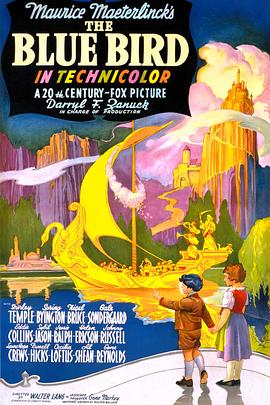 ◎7.6▶
◎7.6▶云裳仙境
战争期间,迈蒂与蒂蒂俩人梦想着能有快乐的自由生活,贝露恩仙女告诉他们,有一种蓝色的鸟可以给人们带来幸福,于是他们偷偷离家出走,踏上了寻找“幸福鸟”旅途,最后发现就在自己的身边,而无需到远处探求。