
内容简介
独居吉祥寺的大学生・纯(桥本爱),某天被找寻已故父亲昔日恋人・佐知子的高中生ハル(永野芽郁)造访。一起寻找佐知子的过程中,两人结识了佐知子的孙子・トキオ(染谷将太)。三人从去世的佐知子的遗物里找到录有ハル父亲和佐知子歌声的开盘式磁带,但磁带中途歌声戛然而止,因此,三人决定共同完成乐章.....
相关推荐
 ◎4.2▶
囚室211
新任狱警胡安(Alberto Ammann 饰)为展示良好职业风貌,提前一天入狱体验工作。而在这一天里,犯人头目“恶母”击伤狱警,带领犯人暴动,监狱陷入了一片混乱……胡安因受伤被同伴丢弃在211囚室,为了避免被犯人们当做人质,他只得乔装罪犯,谋取恶母的信任,试图寻找脱身机会。犯人们以监狱中的三名刑期百年以上的“埃塔”恐怖分子要挟官方答应他们的谈判条件,因政府与埃塔方面有协议在先,监狱方与特别行动组投鼠忌器,迟迟不能强攻,致使局势僵持。另一方面,监狱暴动经媒体报道后引起连锁反应,家属们纷纷来到监狱探听消息,却遭到狱警们的毒打,胡安怀有身孕的妻子不幸受伤,而这让本欲确保自己脱身并协助狱方平息事端的胡安做出了疯狂的举动…… 本片横扫2009年西班牙戈雅奖最佳电影、导演、男主角等八个主要奖项。
 ◎9.1▶
十六个春天
16岁的花季少女苏赞妮,对同龄人的话题丧失了兴趣,在35岁的剧场男演员拉斐尔身上找到灵魂的共鸣。
 ◎5.6▶
夺命巨鳄
风光旖旎的度假岛,新晋网红打卡胜地“紫色湖泊”引来众多游客,“紫色湖泊”接连吞噬游客数人。东南亚某国首富独生女在此无故失踪,战地记者白羽展开调查,经生物学家与“鳄鱼猎人”证实,首富之女已死于鳄鱼之口。首富誓言不惜一切代价猎杀鳄鱼,为女复仇。谁曾想,猎鳄反而被“变异巨鳄”猎杀,命悬一线,谁能死里逃生?
 ◎9.2▶
名扬四海
根据1980年艾伦-帕克导演的经典歌舞片《名扬四海》改编。 在纽约表演艺术高中,年轻人的任何梦想都将可能被实现。无论是舞蹈、歌唱、表演或是拥有其他艺术才华的学生们都将可能在这里得到实现自己艺术梦想的宝贵机会。在舞蹈、歌唱、表演等着有天分并期待着能在艺术方面有所建树的几个年轻人,马可(阿什·布克 Asher Book 饰)、罗茜、尼尔、凯文、丹尼斯(娜图里·劳顿 Naturi Naughton 饰)以及珍妮(凯·帕娜贝克 Kay Panabaker 饰)等,心怀希望来到了这里。 然而,在孩子们入学之初便遭遇了及其严格的考核:来自自己内心不坚定的意志的折磨,使得他们原有的激情都面临考验。另外,青春校园中从来就不缺乏的青春躁动、同学友谊、爱情的萌芽、以及种种对于成功失败的处理方式,都让前来参加入学应试并最终在这所学校里走到一起的孩子们茁壮成长……
 ◎7.7▶
教头发威
清朝末年,广东知名教头童铁铮(狄龙 饰)在广西铁岭绿营司马的盛邀之下去凤凰镇当教头。凤凰镇是当地知名的风月之地,妓院生意非常红火,而客人大多是当地的官僚富人,更有不少士兵。童铁铮带着儿子(樊少皇 饰)进入凤凰镇时就见识了这里的风气,也意外结识了凤凰镇最红的妓女(胡慧中 饰),二人相互欣赏。正式接任教头后,童铁铮有意整治军中的不良风气,第一条就是禁止士卒夜间擅自离开军营。此令一下,不仅军中那些兵油子不乐意,更间接影响了凤凰镇的皮肉生意,惹得妓院幕后主使——捕头金不换(陈惠敏 饰)将之当作肉中刺。于是,金不换常常借机滋事,甚至对童铁铮的儿子狠下毒手……
 ◎3.8▶
花束般的恋爱
山音麦 (菅田将晖 饰) 和八谷绢 (有村架纯 饰) 因错过尾班车而相遇,在深夜咖啡馆聊起文学、电影和音乐,喜好竟奇蹟地相似,二人瞬间坠入爱河。他们毕业后开始一边兼职工作,一边开始同居生活,更一起养拾回来的街猫,最大的目标就是维持俩口子的日常。 但时日流逝,不想改变也得改变。他失约于《牯岭街》, 她独赏郭利斯马基黑色幽默。五年盛放,世上唯一的花未必结果,爱情若只如初见。《垫底辣妹》《借着雨点说爱你》导演土井裕泰联同《东京爱的故事》神级编剧坂元裕二,强调真实生活感的浪漫,菅田将晖和有村架纯衬到绝合演,谱出这代最揪心的爱的故事。
 ◎4.3▶
错嫁
韩家凤祥绸缎庄是当地小有名气的商铺,然而,真正打理凤祥的不是年迈的韩夫人,也不是嗜赌成性的大少爷韩仲泽,而一个名叫沈放的外姓之人。沈放是韩夫人二十年前收养的孤儿,虽然沈放对韩家忠心耿耿,但是,仍然被仲泽排挤,仲泽在韩夫人面前百般谗言,韩夫人对沈放渐起疑心。 沈放与韩府丫环程尔涵两情相悦。然而,仲泽却设计将尔涵娶为妻子。新婚之夜,得知实情的沈放欲与尔涵离开韩家,却在韩夫人的眼泪攻势下屈服,放弃了与尔涵的爱情。深觉受到背叛的尔涵,利用仲泽逼走了沈放,没想到沈放非但没有落迫,反而得贵人相助开起了龙祥绸缎庄。为了报复沈放的背叛,尔涵一再使诈,却都没能成功,一再躲让的沈放不得不反击,而他的一击却带给了凤祥致命的打击,尔涵面对如此结局,再难承受,失去心智疯了,沈放也死在了她的刀下,而仲泽纵是万般忏悔也难以挽回如此结局,一场错嫁落得个家破人亡。
 ◎7.4▶
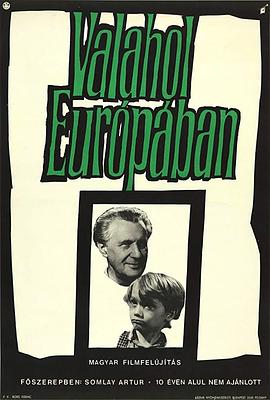
欧洲的某个地方
Somewhere in the remote region, the war ends. In the midst of ruined cities and houses in the streets, in rural hamlets, everywhere where people still live, are children who have lost their homes and parents. Abandoned, hungry, and in rags, defenseless and humiliated, they wander through the world. Hunger drives them. Little streams of orphans merge into a river which rushes forward and submerges everything in its path. The children do not know any feeling; they know only the world of their enemies. They fight, steal, struggle for a mouthful of food, and violence is merely a means to get it. A gang led by Cahoun finds a refuge in an abandoned castle and encounters an old composer who has voluntarily retired into solitude from a world of hatred, treason, and crime. How can they find a common ground, how can they become mutual friends The castle becomes their hiding place but possibly it will also be their first home which they may organize and must defend. But even for this, the price will be very high. To this simple story, the journalist, writer, poet, scriptwriter, movie director, and film theoretician Béla Balázs applied many years of experience. He and the director Géza Radványi created a work which opened a new postwar chapter in Hungarian film. Surprisingly, this film has not lost any of its impact over the years, especially on a profound philosophical level. That is to say, it is not merely a movie about war; it is not important in what location and in what period of time it takes place. It is a story outside of time about the joyless fate of children who pay dearly for the cruel war games of adults. At the time it was premiered, the movie was enthusiastically received by the critics. The main roles were taken by streetwise boys of a children's group who created their roles improvisationally in close contact with a few professional actors, and in the children's acting their own fresh experience of war's turmoil appears to be reflected. At the same time, their performance fits admirably into the mosaic of a very complex movie language. Balázs's influence revealed itself, above all, in the introductory sequences an air raid on an amusement park, seen in a montage of dramatic situations evoking the last spasms of war, where, undoubtedly, we discern the influence of classical Soviet cinematography. Shooting, the boy's escape, the locomotive's wheels, the shadows of soldiers with submachine guns, the sound of a whistle—the images are linked together in abrupt sequences in which varying shots and expressive sharp sounds are emphasized. A perfectly planned screenplay avoided all elements of sentimentality, time-worn stereotypes of wronged children, romanticism and cheap simplification. The authors succeeded in bridging the perilous dramatic abyss of the metamorphosis of a children's community. Their telling of the story (the scene of pillaging, the assault on the castle, etc) independently introduced some neorealist elements which, at that time, were being propagated in Italy by De Sica, Rossellini, and other film artists. The rebukes of contemporary critics, who called attention to formalism for its own sake have been forgotten. The masterly art of cameraman Barnabás Hegyi gives vitality to the poetic images. His angle shots of the children, his composition of scenes in the castle interior, are a living document of the times, and underline the atmosphere and the characters of the protagonists. The success of the picture was also enhanced by the musical art of composer Dénes Buday who, in tense situations, inserted the theme of the Marseilaise into the movie's structure, as a motive of community unification, as an expression of friendship and the possibility of understanding. Valahol Europaban is the first significant postwar Hungarian film. It originated in a relaxed atmosphere, replete with joy and euphoria, and it includes these elements in order to demonstrate the strength of humanism, tolerance, and friendship. It represents a general condemnation of war anywhere in the world, in any form.
 ◎4.7▶
斯诺登
斯诺登2004年应征入伍、后被派遣到伊拉克战场,因不幸在训练时双腿受伤,斯诺登退役回国后应聘加入中情局。之后,他又进入国安局工作,并意外发现政府在“9·11”事件后对公民电话和社交网络实施大规模监控计划,于是泄露了大量机密文件。事发后,斯诺登遭当局通缉,便逃到香港。此后,他几经辗转逃至俄罗斯寻求庇护。
 ◎7.6▶
传奇海盗船长黑胡子(上)
半纪录片半传奇小说的电视电影。
 ◎5.2▶
上帝深爱鱼子酱
伊奥安尼斯·瓦尔瓦基斯一生波澜壮阔,本是无名小海盗,在俄国支持下成为鱼子酱大亨,最后却把自己的所有财富奉献给祖国希腊的解放事业。本片以美味鱼子酱带出一段跌宕起伏、感人肺腑的爱国史诗,演员阵容堪称史诗级,德国老牌影星塞巴斯蒂安·科赫(《窃听风暴》)领衔,阿根廷实力派小生胡安·迭戈·波托(《渐行渐远》)对台,更有约翰·克里斯(《一条叫旺达的鱼》)与凯瑟琳·德纳芙(《八美图》)两位影史传奇助阵。
 ◎5.1▶
三日月与猫
本片讲述迷茫的3个成年男女和1只可爱的猫共同生活的故事:在书店工作的40多岁的单身女性·灯,和30多岁的女医生·鹿乃子、20多岁的男室内装饰销售员·仁,以及爱猫月牙儿友好地居住在一起。对于曾经在熊本过着非常普通生活的灯来说,现在是人生中最“不寻常的生活”,但是却让自己感觉非常开心......