内容简介
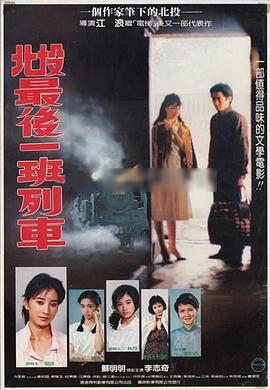
俊明是位作家,除了寫作,還喜歡攝影,為了治療風濕痛的腿,在他個人的環島畢業旅行中,順路到北投一趟。俊明在一家旅館內結識了一名服務生明芬,兩人情投意合,相處得極為融洽。後來俊明才知道明芬有一個雙胞姐姐明惠,明惠端莊賢淑,具有中國的傳統美德,明芬俏麗活潑,惹人憐愛,明芬原本有個丈夫家祥,但家祥體弱多病,為了不連累明芬,明惠乃代替明芬,長期的照顧家祥。
相关推荐

◎5.3▶米克的近路
故事发生在1845年,西部大迁徙的步伐刚刚迈出,想要穿越那片荒芜而又充满了凶险的蛮荒之地,除了需要足够的勇气和运气之外,智慧必不可少。三个家庭决定离开故土,寻找新的生活,为了自保,他们找到了一位名叫米克(布鲁斯·格林伍德 Bruce Greenwood 饰)的向导,希望他能够护送他们安全抵达目的地。 然而,当众人在米克所谓的近路上渐行渐远之时,越来越荒凉的景象和越来越陌生的环境让他们知道,他们迷路了。资源在渐渐的消耗,饥渴和恐慌逐渐消磨着人们的意志,就在大家觉得走投无路之际,一名当地土著的到来带来了新的希望,然而,他们并不能肯定,来人是朋友,还是敌人。
◎9.3▶熔炉
来自首尔的哑语美术老师仁浩(孔宥 饰)来到雾津,应聘慈爱聋哑人学校。天降大雾,他意外撞车,维修时邂逅了人权组织成员柔珍(郑有美 饰)。仁浩妻子早亡,8岁女儿天生哮喘由祖母照看,所以他不辞辛苦谋职养家。然而,双胞胎的校长与教导主任竟逼仁浩索贿5千万韩元。同时,仁浩逐渐发现学校笼罩着一种紧张压抑的气氛,令人窒息。有三个孩子引人关注:聪颖的金妍斗(金贤秀 饰)、贪吃的陈宥利(郑仁絮 饰)和弟弟自杀身亡的全民秀(白承焕 饰),民秀总是满脸淤青。下课后,仁浩还听到女厕所中有呼喊与哭泣,在门卫的阻拦下他未深究。之后。他意外目睹了校长行贿警察,教导员毒打民秀,宿导溺罚妍斗的行径。一个惊天的隐秘被慢慢揭开,真相令韩国震惊…… 本片取材于2005年光州一所聋哑障碍人学校的真实事件,改编自韩国作家孔枝泳的同名小说。
◎8.5▶从地心反击
迪克是美国海军特务,专明打击国际恐怖组织,却经常让女友乔丝牵挂这一次任务是针对一位背国离乡的狂人赖纳德组织,其资金雄厚收买了各国的武器专家,更重要的是他绑架了史博士,做出超级病毒他将病毒放在深海中,设定了定时引爆,再勒索美国政府大笔赎金,否则就要毒化全世界,美方不想惊动人,只派他和菲利普二人小组去赖纳德海底实验室基地把病毒偷回来…
◎9.9▶南方大冰雪
二期士官赵多福(王奕盛 饰)面临复员和留职的关键时候,却面临一起将被严肃处理“冤案”,而“冤案”的主人公正是80后姑娘云门舞姬(房思瑜 饰)。原来,双方的车发生刮蹭后,“云门舞姬”将赵多福“飘逸”的开车视频贴上了微博,一时跟帖过万…… 80后军官周志强(吴超 饰)个性彰显,目标远大,但生活中的他却正经历着最尴尬的境地,女朋友因他买不起商品房不肯与他结婚,然而军医王新蔓(江佳奇 饰)深爱上他,面临“小三”的命运…… “富二代”杨华华(敖翔 饰),从小娇生惯养,迫于企业家父亲的压力,到部队混了两年,困惑着找不到人生的意义…… 一场世纪雪灾来袭,他们都会发生怎样的变化?
◎3▶爱的行为
The story follows a woman who lives an orderly life in a religious community until her brother arrives. The leader of the community knows about their difficult upbringing and insists that they resolve their childhood trauma through the therapeutic rituals of the community. But a secret starts to surface which could prove disastrous.
◎9.1▶猫头鹰与小飞象
“小飞象”陈初(洪金宝 饰)自幼习武,身手矫健,在打劫了一家财务公司获得了巨款之后,他决心金盆洗手,回归平静的生活。“猫头鹰”黄人富(林子祥 饰)谙熟处世之道,头脑精明聪慧,设计骗得了黑心商人欧根非法获得的赃款之后亦决定洗心革面,不再出山。 一晃眼三年过去,远离江湖的陈初开起了健身馆,生意经营得风生水起,而黄人富亦依靠之前积累的财富,过着衣食无忧的生活。一封不期而至的神秘信件彻底打破了两人闲适的生活,信中揭露了他们不为人知的的过去,并以此要挟他们重出江湖,否则就要将信件的内容公之于众。无奈之下,陈初和黄人富只能再度联手,和幕后的黑手进行殊死搏斗。
◎8.7▶米香
家在四川阿坝的米香(陶红 饰)遭丈夫抛弃后,一个人带傻儿子(杨青 饰)生活,同村的马金花(王菁华 饰)让她去北方小煤矿找个光棍嫁了,因为矿工出事后会赔偿数目可观的怃恤金。米香千里迢迢北上河南,在一个小煤矿安顿下来。经过筛选,她相中了矿工王驼子(孙亮 饰)。驼子原来被女人 放过鸽子,他本想只同居不结婚,但架不住傻儿子一口一个爹地叫着,终于迎娶了四川女人米香,被米香拒绝过的大李(潘泰名 饰)黯然神伤。结婚后,米香盼着又老又丑的驼子早日出事,不料死的竟是米香心中所爱的大李。米香偷偷跑到煤山挖自已咒死丈夫的罪证,不幸被砸伤住院,一切蒙在敲里的驼子花光了所有积蓄为米香看病,米香羞愧交加......
◎3.4▶关于在短时间内的某几个人的经过
Voice 1 (male professional announcer type) This neighborhood(1) was made for the wretched dignity of the petty bourgeoisie, for respectable occupations and intellectual tourism. The sedentary population of the upper floors was sheltered from the influences of the street. This neighborhood has remained the same. It was the strange setting of our story, where a systematic questioning of all the diversions and works of a society, a total critique of its idea of happiness, was expressed in acts. These people also scorned subjective profundity. They were interested in nothing but an adequate and concrete expression of themselves. Voice 2 (Debord, monotone) Human beings are not fully conscious of their real life - usually groping in the dark; overwhelmed by the consequences of their acts; at every moment groups and individuals find themselves confronted with results they have not wished. Voice 1 They said that oblivion was their ruling passion. They wanted to reinvent everything each day; to become the masters and possessors of their own lives. Just as one does not judge a man according to the conception he has of himself, one cannot judge such periods of transition according to their own consciousness; on the contrary, one must explain the consciousness through the contradictions of material life, through the conflict between social conditions and the forces of social production. The progress achieved in the domination of nature was not yet matched by a corresponding liberation of everyday life. Youth passed away among the various controls of resignation. Our camera has captured for you a few aspects of a provisional microsociety. The knowledge of empirical facts remains abstract and superficial as long as it is not concretized by its integration into the whole ” which alone permits the supersession of partial and abstract problems so as to arrive at their concrete essence, and implicitly at their meaning. This group was on the margins of the economy. It tended toward a role of pure consumption, and first of all the free consumption of its time. It thus found itself directly engaged in qualitative variations of everyday life but deprived of any means to intervene in them. The group ranged over a very small area. The same times brought them back to the same places. No one went to bed early. Discussion on the meaning of all this continued... Voice 2 Our life is a journey ” In the winter and the night. ” We seek our passage...� Voice 1 The abandoned literature nevertheless exerted a delaying action on new affective formulations. Voice 2 There was the fatigue and the cold of the morning in this much-traversed labyrinth, like an enigma that we had to resolve. It was a looking-glass reality through which we had to discover the potential richness of reality. On the bank of the river evening began once again; and caresses; and the importance of a world without importance. Just as the eyes have a blurred vision of many things and can see only one clearly, so the will can strive only incompletely toward diverse objects and can completely love only one at a time. Voice 3 (young girl) No one counted on the future. It would never be possible to be together later, or anywhere else. There would never be a greater freedom. Voice 1 The refusal of time and of growing old automatically limited encounters in this narrow, contingent zone, where what was lacking was felt as irreparable. The extreme precariousness of the means of getting by without working was at the root of this impatience which made excesses necessary and breaks definitive. Voice 2 One never really contests an organization of existence without contesting all of that organization's forms of language. Voice 1 When freedom is practiced in a closed circle, it fades into a dream, becomes a mere representation of itself. The ambiance of play is by nature unstable. At any moment ordinary life� can prevail once again. The geographical limitation of play is even more striking than its temporal limitation. Any game takes place within the contours of its spatial domain. Around the neighborhood, around its fleeting and threatened immobility, stretched a half-known city where people met only by chance, losing their way forever. The girls who found their way there, because they were legally under the control of their families until the age of eighteen, were often recaptured by the defenders of that detestable institution. They were generally confined under the guard of those creatures who among all the bad products of a bad society are the most ugly and repugnant nuns. What usually makes documentaries so easy to understand is the arbitrary limitation of their subject matter. They describe the atomization of social functions and the isolation of their products. One can, in contrast, envisage the entire complexity of a moment which is not resolved into a work, a moment whose movement indissolubly contains facts and values and whose meaning does not yet appear. The subject matter of the documentary would then be this confused totality. Voice 2 The era had arrived at a level of knowledge and technical means that made possible, and increasingly necessary, a direct construction of all aspects of a liberated affective and practical existence. The appearance of these superior means of action, still unused because of the delays in the project of liquidating the commodity economy, had already condemned aesthetic activity, whose ambitions and powers were both outdated. The decay of art and of all the values of former mores had formed our sociological background. The ruling class's monopoly over the instruments we needed to control in order to realize the collective art of our time had excluded us from a cultural production officially devoted to illustrating and repeating the past. An art film on this generation can only be a film on its absence of real creations. Everyone unthinkingly followed the paths learned once and for all, to their work and their home, to their predictable future. For them duty had already become a habit, and habit a duty. They did not see the deficiency of their city. They thought the deficiency of their life was natural. We wanted to break out of this conditioning, in quest of another use of the urban landscape, in quest of new passions. The atmosphere of a few places gave us intimations of the future powers of an architecture it would be necessary to create to be the support and framework for less mediocre games. We could expect nothing of anything we had not ourselves altered. The urban environment proclaimed the orders and tastes of the ruling society just as violently as the newspapers. It is man who makes the unity of the world, but man has extended himself everywhere. People can see nothing around them that is not their own image; everything speaks to them of themselves. Their very landscape is alive. There were obstacles everywhere. There was a cohesion in the obstacles of all types. They maintained the coherent reign of poverty. Everything being connected, it was necessary to change everything by a unitary struggle, or nothing. It was necessary to link up with the masses, but we were surrounded by sleep. Voice 3 The dictatorship of the proletariat is a desperate struggle, bloody and bloodless, violent and peaceful, military and economic, educational and administrative, against the forces and traditions of the old world. Voice 1 In this country it is once again the men of order who have rebelled. They have reinforced their power. They have been able to aggravate the grotesqueness of the ruling conditions according to their will. They have embellished their system with the funereal ceremonies of the past. Voice 2 Years, like a single instant prolonged to this point, come to an end. Voice 1 What was directly lived reappears frozen in the distance, fit into the tastes and illusions of an era, carried away with it. Voice 2 The appearance of events that we have not made, that others have made against us, now obliges us to be aware of the passage of time, its results, the transformation of our own desires into events. What differentiates the past from the present is precisely its out-of-reach objectivity; there is no more should-be; being is so consumed that it has ceased to exist. The details are already lost in the dust of time. Who was afraid of life, afraid of the night, afraid of being taken, afraid of being kept Voice 3 What should be abolished continues, and we continue to wear away with it. We are engulfed. We are separated. The years pass and we haven't changed anything. Voice 2 Once again morning in the same streets. Once again the fatigue of so many similarly passed nights. It is a walk that has lasted a long time. Voice 1 Really hard to drink more. Voice 2 Of course one might make a film of it. But even if such a film succeeds in being as fundamentally disconnected and unsatisfying as the reality it deals with, it will never be more than a re-creation ” poor and false like this botched traveling shot. Voice 3 There are now people who pride themselves on being authors of films, as others were authors of novels. They are even more backward than the novelists because they are unaware of the decomposition and exhaustion of individual expression in our time, ignorant of the end of the arts of passivity. They are praised for their sincerity since they dramatize, with more personal depth, the conventions of which their life consists. There is talk of the liberation of the cinema. But what does it matter to us if one more art is liberated through which Tom, Dick or Harry can joyously express their slavish sentiments The only interesting venture is the liberation of everyday life, not only in the perspectives of history but for us and right away. This entails the withering away of alienated forms of communication. The cinema, too, has to be destroyed. Voice 2 In the final analysis, stars are created by the need we have for them, and not by their talent or lack of talent or even by the film industry or advertising. Miserable need, dismal, anonymous life that would like to expand itself to the dimensions of cinema life. The imaginary life on the screen is the product of this real need. The star is the projection of this need. The images of the advertisements during the intermissions are more suited than any others for evoking an intermission of life. To really describe this era it would no doubt be necessary to show many other things. But what would be the point Better to grasp the totality of what has been done and what remains to be done than to add more ruins to the old world of the spectacle and of memories. 1. This film, which evokes the lettrist experiences at the origin of the situationist movement, opens with shots of the Paris district frequented by the lettrists in the early 1950s.
◎6.4▶魔鬼的陷阱
In the time of Counter-Reformation, a miller and his son come under investigation by a priest of the Inquisition, when rumors spread that their prosperity comes from working with the Devil. The Devil's Trap is a film directed by František Vláil, based on a novel by Alfréd Technik, adapted by František A. Dvorák and Miloš Kratochvíl. It was the first of three historical dramas that Vláil made during the Czech New Wave (technically he isn't really a part of the New Wave, however these films were made during the same era of artistic freedom), preceding his more well known Marketa Lazarová (1967) and Valley of the Bees (1968). Set in the late 16th Century during the Catholic Reformation, in the Moravian Karst, situated in what is now the Eastern Czech Republic, it tells the tale of a miller (Vítezslav Vejrazka), and his son Jan (Vít Olmer), who come under suspicion and are investigated by a Jesuit priest of the Inquisition (Miroslav Macháchek), when rumors of witchcraft are spread by the local regent (Cestmír Randa), who is jealous of the miller's prosperity and degree of respect among the local populace. As expected from Vláil, this film is a stunning experience all the way through. From the opening shot, an ominous manipulation of perspective with a close up of a mangled figure of Christ dominating the foreground against a tiny figure in black walking along the horizon, to the breathtaking confrontational finale inside the vast stalactite filled Karst caverns, it is a wonderful display of visual mastery. Maybe not quite as impressive as Marketa Lazarová, but still full of astonishing imagery. As seen from unique angles and distinct points of view which highlight the director's remarkable sense of awareness of framing, motion, and positioning on the emotional and dramatic tone of the scene. The most memorable being a repeated shot where the camera is suspended and launched with speed through the air towards the miller's door. The story here is a simple one and I would say more accessible than his later works. With a conventional structure emphasized as much by its plot and characters, than by its expressionistic cinematography or authentic historical detail. The events play out without much surprise, and there is a strong underlying, almost supernatural, mysterious aspect that is left unresolved, in fact barely explored, which is slightly disappointing, but only because it's so fascinating that I wish there was more. Acting is great all around. Particularly the villains Miroslav Macháchek as the priest, casting a sinister and imposing shadow wherever he goes, and Cestmír Randa as the weasel like regent behind all the persecution. While Vít Olmer brings a charismatic leading man presence in his role as the miller's son Jan, in love with the lovely orphan girl Martina (Karla Chadimová), who becomes a dangerous object of rivalry between Jan and other young men of the village. The film also features the evocative music of Zdenk Liška (perhaps the most prolific composer of the Czech New Wave). In this his second of eleven collaborations with Vláil, his compositions are used sparingly, but to great effect, complimenting but never overpowering a scene. The best example of which can be heard in an amazingly shot celebration and dance sequence at the end of the second act. The Devil's Trap might not be a masterpiece, but it is still a strong effort, with a fascinating straightforward story and a glorious historical setting captured beautifully by Vláil's unmistakable visual prowess. A fine work that would also be the perfect starter plate to prepare yourself for the challenging feast of Marketa Lazarová or The Valley of the Bees. It even has an easy to digest running time. It's therefore puzzling why this gem remains largely overlooked and ignored.
◎7.8▶孕城
清朝末年,汉口的地皮大王刘宗祥,通过修路,拆城墙,修张公堤,购买后湖尚未淤出的无主官地等一系列大手笔,为汉口的形成和发展打下了坚实的基础。塑造了一批血肉丰满,栩栩如生的人物艺术形象,纸醉金迷的洋场
◎6.6▶摇晃之地
一位有抱负的音乐家正在应对他最好的朋友的去世,当一位声名狼藉的唱片公司高管意外访问他的家乡时,他找到了目标。
◎6.7▶甘地传
本片记录了印度圣雄甘地史诗般传奇伟大的一生。1893年,24岁的甘地(本•金斯利 Ben Kingsley 饰)受邀前往南非任律师职,决心在当地带领印度移民开展非暴力不合作的抗议活动,并因此入狱。出狱后甘地回到祖国,在三八朗地区建立了高僧修行所,加入了国大党领导的印度独立运动,宣传非暴力不合作的斗争理念。运动中甘地曾四次入狱;在其不懈努力及国大党的带领下,印度独立终于提上议事日程,甘地也于1931年赴伦敦参加商讨独立的圆桌会议。然而随着独立的临近,印度国内穆斯林与印度教人民之间的宗教矛盾日益突出,甘地的非暴力不合作理念又面临着更为严峻的新挑战…… 本片获1982年奥斯卡最佳影片,最佳导演(理查德•阿滕伯勒Richard Attenborough),最佳男演员(本•金斯利),最佳原创剧本,最佳艺术指导,最佳摄影,最佳服装设计和最佳剪辑共八项大奖,并获奥斯卡最佳化妆,最佳电影音乐和最佳音效三项提名。