
内容简介
剧情简介暂缺,敬请期待
相关推荐
 ◎4.3▶
蜡笔和小新的故事
一场车祸之后,失忆的刘欣回老家休养。 一个偶然的机会,刘欣找到了儿时的几幅蜡笔画,这些画触动了她的记忆。 小学时,刘欣有个同学叫周小生,因总是随身带着蜡笔,被人取外号“蜡笔仔“,而刘欣小名小欣,“蜡笔”和“小新”,在同名卡通片以及同名果冻的影响下,他们成为了那时同学们开玩笑的对象。他们也因此本能地建立起一种敌对情绪,成为一对小冤家。这幅画就是那时候“蜡笔”送给“小新”的和解礼物。 中学时代他们又成为同学。周小生带着刘欣听摇滚乐,帮助她去追求自己喜欢的男孩,像个守护神一样守着她的少年时代。 刘欣向父母询问周小生的消息,父母却遮遮掩掩地告诉她并不认识这个人。父母的闪烁其词让刘欣感到他们在向自己隐瞒着什么,而同时她也发现,自己在找寻记忆的过程中,一直有个神秘的黑衣人在跟踪她,甚至这个黑衣人跟自己的闺蜜陶丽娜还有着联系。她平静的休养生活也至此变得扑朔迷离起来。 几天后,刘欣收到一个神秘的包裹,包裹里是一盒曾经代表刘欣和周小生的果冻和一幅画,画面上一男一女坐在一个酒吧里。这一男一女都像极了成年之后的刘欣和周小生。 一定有个秘密在她和周小生之间,而且与她经历的那场车祸有关,为找到真相,她偷偷离开了父母,只身去寻找答案……
 ◎8.2▶
雷霆万钧
本片是由篮球明星凯文·杜兰特亲自主演,影片讲述篮球巨星凯文·杜兰特和一个16岁的小球迷布莱恩(Taylor Gray 饰)交换了天赋。当布莱恩从一个肢体不协调的年轻球迷变成他崇拜的篮球英雄凯文·杜兰特时,他的生活也随之改变。布莱恩一跃成为高中校队的明星,而凯文·杜兰特却失去了打篮球的技能,甚至连一记篮球也投不进去。这时季后赛即将来临,他们两人会怎样面对这一切呢?
 ◎5.1▶
玫瑰物语
小镇青年张恒和李娜在一家KTV里相识相爱,后李娜跟着张恒来到了他的老家玫瑰镇,两人过起了简单幸福的生ccc。由于对金钱的欲望使张恒不惜铤而走险走上赌博的不归路。在赌徒孙大刚的蛊惑下,张恒险些倾家荡产,李娜也差点遭到孙大刚的侮辱。后张恒改邪归正,帮助警方捣毁了孙大刚的老巢。张恒坐牢,李娜心里仍然深爱着张恒,她决定带着肚子里的孩子等着张恒出狱的那一天。
 ◎8.8▶
要命的吸引力
奈德·拉辛(威廉·赫特饰)是一位油滑无能又好色的佛罗里达律师。在一场音乐会上,奈德邂逅了已婚名媛麦蒂·沃克(凯瑟琳·特纳饰)。二人的婚外恋情使奈德日益疯狂,他终于决定铲除麦蒂的丈夫,大亨埃德蒙·沃克(理查德·克里纳饰),帮麦蒂继承财产后远走高飞。命案发生后,奈德的好友,公诉律师皮特和警探奥斯卡都反对奈德与麦蒂继续交往,同时不得不对埃德蒙·沃克之死展开调查。事态的发展越来越超出奈德的预料,他究竟能否信任麦蒂。
 ◎9.5▶
盲眼杀机
眼盲的教授杰克经历了一场极具实验性的手术来恢复视力,但捐赠给他的那双眼睛却是来自一位心狠手辣的杀人魔,彷彿被附身的杰克因此性情大变,而他的妻子也被迫面临这失控的一切。
 ◎9.9▶
盲女凶杀案
琼(安迪·加西亚 Andy Garcia 饰)是一名经验丰富的警探,从洛杉矶被调往位于加州的一座小镇中执勤。小镇里发生了耸人听闻的分尸杀人案,琼和搭档格斯(兰斯·亨利克森 Lance Henriksen 饰)成为了案件的负责人。在调查案件的过程中,琼发现这并不是一宗单纯的谋杀案,之前还有数起未侦破的案件,凶手很可能和此次案件是同一个人。 根据搜索到的线索,琼查明了被害人的身份是一位名叫安柏盲女,于是,他和搭档来到了安柏所就读的盲人学校中。根据失明女教师海伦娜(乌玛·瑟曼 Uma Thurman 饰)的描述,竟然将怀疑的目标渐渐引向了琼的身上,令他成为了最大嫌疑人,与此同时,格斯也在执行任务时不幸丧命。
 ◎3.4▶
野性钻石
19 岁的 Liane 勇敢而热情,与母亲和妹妹一起生活在法国南部弗雷瑞斯尘土飞扬的阳光下。 她痴迷于美丽和成为“某人”的需要,将真人秀视为她被爱的机会……当她试镜“奇迹岛”时,命运向她微笑。
 ◎8.7▶
爱情百态
阿舒(约翰·亚伯拉罕 John Abraham 饰)和苔兹(薇迪雅·巴兰 Vidya Balan 饰)结婚两年,夫妻两人的感情非常的要好。谁知道,一场车祸令苔兹患上了失忆症,甚至忘记了自己最爱的丈夫。席文(阿克夏耶·坎纳 Akshaye Khanna 饰)和吉雅(阿耶莎·塔姬娅 Ayesha Takia 饰)决定携手步入婚姻的殿堂,但在这个节骨眼上,吉雅退缩了,因为她爱上了别的男人。 卡梅尼(朴雅卡·乔普拉 Priyanka Chopra 饰)为了摆脱烂桃花而捏造了一个并不存在的男友拉胡(萨尔曼·汗 Salman Khan 饰),哪知道某一天,竟然真的有一个名叫拉胡的男子出现在了她的面前。演艺经纪人维纳(亚尼·卡普 Anil Kapoor 饰)在感情里开了小差,出轨了名叫安佳妮(安妮娜·苏哈尼 Anjana Sukhani 饰)的女演员。
 ◎7.3▶
大内游龙
剧情简介暂缺,敬请期待
 ◎4.5▶
村支书金岚岚
出品单位 合肥市广播电视台 审计局年轻干部金岚岚到叶集村任职选派干部,一直生活在城市的她刚入农村,格格不入。面对村里人的质疑,金岚岚没有选择争辩,而是选择用自己的努力去赢取村民的信任……
 ◎7.4▶
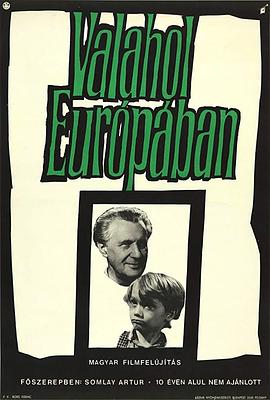
欧洲的某个地方
Somewhere in the remote region, the war ends. In the midst of ruined cities and houses in the streets, in rural hamlets, everywhere where people still live, are children who have lost their homes and parents. Abandoned, hungry, and in rags, defenseless and humiliated, they wander through the world. Hunger drives them. Little streams of orphans merge into a river which rushes forward and submerges everything in its path. The children do not know any feeling; they know only the world of their enemies. They fight, steal, struggle for a mouthful of food, and violence is merely a means to get it. A gang led by Cahoun finds a refuge in an abandoned castle and encounters an old composer who has voluntarily retired into solitude from a world of hatred, treason, and crime. How can they find a common ground, how can they become mutual friends The castle becomes their hiding place but possibly it will also be their first home which they may organize and must defend. But even for this, the price will be very high. To this simple story, the journalist, writer, poet, scriptwriter, movie director, and film theoretician Béla Balázs applied many years of experience. He and the director Géza Radványi created a work which opened a new postwar chapter in Hungarian film. Surprisingly, this film has not lost any of its impact over the years, especially on a profound philosophical level. That is to say, it is not merely a movie about war; it is not important in what location and in what period of time it takes place. It is a story outside of time about the joyless fate of children who pay dearly for the cruel war games of adults. At the time it was premiered, the movie was enthusiastically received by the critics. The main roles were taken by streetwise boys of a children's group who created their roles improvisationally in close contact with a few professional actors, and in the children's acting their own fresh experience of war's turmoil appears to be reflected. At the same time, their performance fits admirably into the mosaic of a very complex movie language. Balázs's influence revealed itself, above all, in the introductory sequences an air raid on an amusement park, seen in a montage of dramatic situations evoking the last spasms of war, where, undoubtedly, we discern the influence of classical Soviet cinematography. Shooting, the boy's escape, the locomotive's wheels, the shadows of soldiers with submachine guns, the sound of a whistle—the images are linked together in abrupt sequences in which varying shots and expressive sharp sounds are emphasized. A perfectly planned screenplay avoided all elements of sentimentality, time-worn stereotypes of wronged children, romanticism and cheap simplification. The authors succeeded in bridging the perilous dramatic abyss of the metamorphosis of a children's community. Their telling of the story (the scene of pillaging, the assault on the castle, etc) independently introduced some neorealist elements which, at that time, were being propagated in Italy by De Sica, Rossellini, and other film artists. The rebukes of contemporary critics, who called attention to formalism for its own sake have been forgotten. The masterly art of cameraman Barnabás Hegyi gives vitality to the poetic images. His angle shots of the children, his composition of scenes in the castle interior, are a living document of the times, and underline the atmosphere and the characters of the protagonists. The success of the picture was also enhanced by the musical art of composer Dénes Buday who, in tense situations, inserted the theme of the Marseilaise into the movie's structure, as a motive of community unification, as an expression of friendship and the possibility of understanding. Valahol Europaban is the first significant postwar Hungarian film. It originated in a relaxed atmosphere, replete with joy and euphoria, and it includes these elements in order to demonstrate the strength of humanism, tolerance, and friendship. It represents a general condemnation of war anywhere in the world, in any form.
 ◎8.6▶
东云色的周末
电影讲述3名女性故地重游回到即将解体的母校,回忆青春岁月的故事。影片聚焦职业女性的现实,讨论她们的现实生活与“理想女性生活”的距离。