内容简介
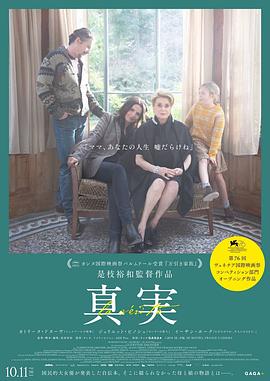
Fabienne是一个女星——是法国影坛巨星。在拥护爱戴她的男人面前她是高高在上的女神。她的女儿因她出版回忆录而带着丈夫和年幼的孩子从纽约回到巴黎。母女二人的重聚很快便变成互相指责:真相将被揭露、算清所有前帐,向对方坦然承认自己的爱和怨恨。
相关推荐
 ◎7.3▶
◎7.3▶白色花果
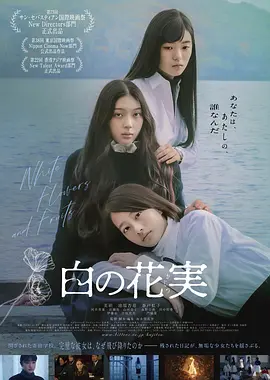
故事发生在一所女子基督教寄宿学校。安娜因能看见鬼魂,总觉得自己与周围格格不入。她的室友里香则截然不同:她人气爆棚、受人喜爱,是个让所有人都心生敬佩的优等生。然而,当里香选择自杀后,整个学校都陷入了震动,其中最受打击的莫过于她最亲密的朋友诗织——诗织始终难以接受这一失去,试图弄明白背后的缘由。安娜发现里香的日记后,开始感觉到里香的灵魂在自己面前显现,并且正慢慢渗入她的身体……
 ◎8.4▶
◎8.4▶倩女冤魂
一段被世人传唱百年,悱恻缠绵的人鬼情。
 ◎7.4▶
◎7.4▶欧洲的某个地方
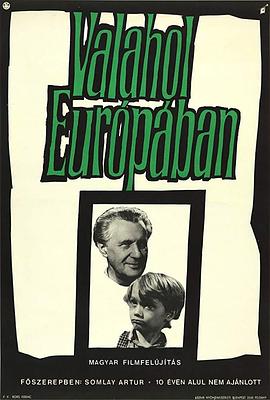
Somewhere in the remote region, the war ends. In the midst of ruined cities and houses in the streets, in rural hamlets, everywhere where people still live, are children who have lost their homes and parents. Abandoned, hungry, and in rags, defenseless and humiliated, they wander through the world. Hunger drives them. Little streams of orphans merge into a river which rushes forward and submerges everything in its path. The children do not know any feeling; they know only the world of their enemies. They fight, steal, struggle for a mouthful of food, and violence is merely a means to get it. A gang led by Cahoun finds a refuge in an abandoned castle and encounters an old composer who has voluntarily retired into solitude from a world of hatred, treason, and crime. How can they find a common ground, how can they become mutual friends The castle becomes their hiding place but possibly it will also be their first home which they may organize and must defend. But even for this, the price will be very high. To this simple story, the journalist, writer, poet, scriptwriter, movie director, and film theoretician Béla Balázs applied many years of experience. He and the director Géza Radványi created a work which opened a new postwar chapter in Hungarian film. Surprisingly, this film has not lost any of its impact over the years, especially on a profound philosophical level. That is to say, it is not merely a movie about war; it is not important in what location and in what period of time it takes place. It is a story outside of time about the joyless fate of children who pay dearly for the cruel war games of adults. At the time it was premiered, the movie was enthusiastically received by the critics. The main roles were taken by streetwise boys of a children's group who created their roles improvisationally in close contact with a few professional actors, and in the children's acting their own fresh experience of war's turmoil appears to be reflected. At the same time, their performance fits admirably into the mosaic of a very complex movie language. Balázs's influence revealed itself, above all, in the introductory sequences an air raid on an amusement park, seen in a montage of dramatic situations evoking the last spasms of war, where, undoubtedly, we discern the influence of classical Soviet cinematography. Shooting, the boy's escape, the locomotive's wheels, the shadows of soldiers with submachine guns, the sound of a whistle—the images are linked together in abrupt sequences in which varying shots and expressive sharp sounds are emphasized. A perfectly planned screenplay avoided all elements of sentimentality, time-worn stereotypes of wronged children, romanticism and cheap simplification. The authors succeeded in bridging the perilous dramatic abyss of the metamorphosis of a children's community. Their telling of the story (the scene of pillaging, the assault on the castle, etc) independently introduced some neorealist elements which, at that time, were being propagated in Italy by De Sica, Rossellini, and other film artists. The rebukes of contemporary critics, who called attention to formalism for its own sake have been forgotten. The masterly art of cameraman Barnabás Hegyi gives vitality to the poetic images. His angle shots of the children, his composition of scenes in the castle interior, are a living document of the times, and underline the atmosphere and the characters of the protagonists. The success of the picture was also enhanced by the musical art of composer Dénes Buday who, in tense situations, inserted the theme of the Marseilaise into the movie's structure, as a motive of community unification, as an expression of friendship and the possibility of understanding. Valahol Europaban is the first significant postwar Hungarian film. It originated in a relaxed atmosphere, replete with joy and euphoria, and it includes these elements in order to demonstrate the strength of humanism, tolerance, and friendship. It represents a general condemnation of war anywhere in the world, in any form.
 ◎3.2▶
◎3.2▶街头武士
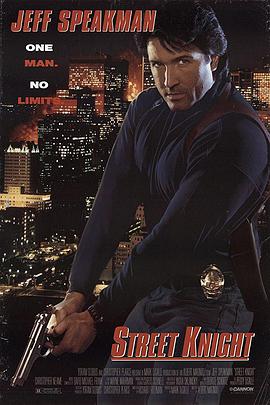
A former cop returns to challenge a plot to escalate gang violence in the streets of Los Angeles.
 ◎4.7▶
◎4.7▶末代独裁
二十世纪七十年代,年轻的苏格兰医生尼古拉斯•哥瑞肯(James McAvoy 詹姆斯•麦艾维 饰)踌躇满志,怀着为穷苦人民救死扶伤的伟大理想来到了贫困的乌干达。在此他结识了医学会的白人同事,美丽的莎拉(Gillian Anderson 吉莉•安德森 饰),深深为之所吸引 。 某次集会上,尼古拉斯得以见到乌干达总统安迪•阿明(Forest Whitaker 福里斯特•惠特克 饰),阿明的言论使尼古拉斯甚为着迷,甚至狂热崇拜。集会之后,他救助了因事故受伤的阿明,并因其苏格兰人身份受到赏识。之后更以总统御用医生的身份走近这位残暴君主…… 影片改编自Giles Foden的同名小说,男主角福里斯特•惠特克凭借此片获得第79届奥斯卡奖最佳男主角奖。
 ◎9.3▶
◎9.3▶两个俏公主
这是一个少女心满满的童话故事,堂庭国的公主红铃,为了帮助天鹅王子找回圣羽,和乐游国的公主桃茜一起,经历各种险境,最终实现了她们的承诺。她们不仅找回了圣羽,还为象神大陆上两国之间的和平做出了巨大的努力。
 ◎5.1▶
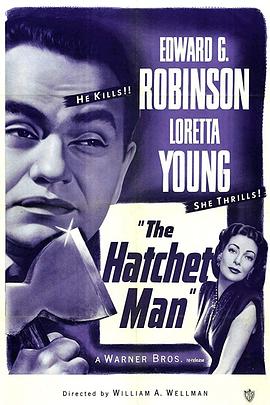
◎5.1▶诚实的黄先生
San Francisco Tong hatchet man Wong must execute his boyhood friend Sun. Sun knew his time was up and wrote out his will just prior to Wong showing up at his door. When Sun realizes Wong is there to kill me he tries to set his friend's mind at ease by telling him he is the beneficiary of all Sun's worldly possessions and convinces Wong to promise to take care of Sun's young daughter, Toya San who Sun has bequeathed to become his wife. Years later, when she becomes of age, she marries Wong, now a powerful figure, though she loves evil Harry. When Wong learns Toya will be happier with Harry he allows them to leave. Still later Wong learns that Harry has been deported and since Toya could not prove she was married to someone else she too was deported to China. When Wong learns of this, he goes after them.
 ◎5.1▶
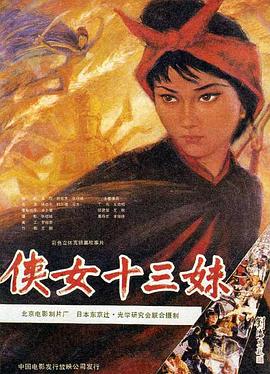
◎5.1▶侠女十三妹
故事发生在清朝雍正年间,大臣纪献唐(葛存壮 饰)深受皇上的宠幸,因此格外放肆狂妄。他看上了副将何杞的女儿何玉凤(丁岚 饰),想霸占她做自己的儿媳,哪知道何杞一身傲骨断然拒绝。愤怒的纪献唐设计将何家灭门,只有何玉凤死里逃生。愤怒和悲伤之中,她发誓要提父亲报仇。 何玉凤找到了深藏不露的邓九公(马永安 饰),向他拜师学艺,习得了一身了得的功夫,并化名十三妹,只等复仇的时机到来。哪知道纪献唐远比十三妹想象的要狡猾得多,她的两次复仇计划均以失败告终。一次偶然中,十三妹得知有人想要陷害善良单纯的安公子(王伯昭 饰),不惜远赴悦来客栈,向后者报信。
 ◎9.1▶
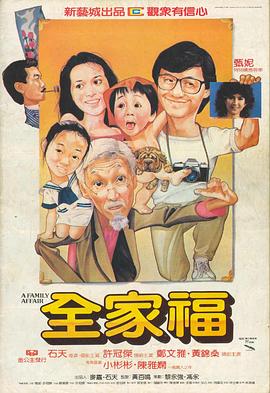
◎9.1▶全家福
结婚多年的家昌(许冠杰 饰)与正男(郑文雅 饰)育有一女一子,两人分居后各自抚养一个孩子。不久夫妇二人各自有了新欢,唯有两个孩子希望能父母复合团聚,各施计谋戏弄对方的新欢,让他们知难而退。可是家昌与正男每次见面都会不欢而散,最终决定离婚。儿女十分难过,相约离家出走,要到外公提到的寺院祈求父母能复合。他们千辛万苦找到儿女,也听到了儿女的感人祈求,最后他们能不能破镜重圆呢?
 ◎3.2▶
◎3.2▶爱在黄昏日落前
剧情简介暂缺,敬请期待
 ◎6.1▶
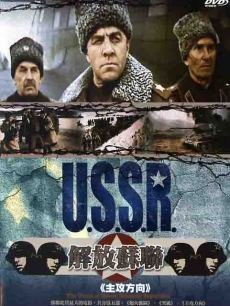
◎6.1▶解放3:主攻方向
《解放3:主攻方向》本片为二战题材电影,由原苏联制作,讲述了苏联一次重要的反攻战ddd。
 ◎4.2▶
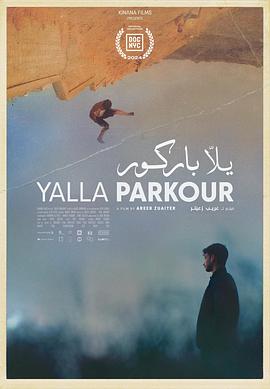
◎4.2▶一起跑酷
The story of Ahmad and his passion for the sport of freedom that drives him to break through the borders of his besieged city of Gaza.